The Clinton Parameters
Initiative or proposalProposal, not adopted
An American bridging proposal, delivered orally. It is not an agreement, and not a signed document or an official written text; both sides accepted it with reservations, and it never became an agreement.
In one sentence
To sketch, weeks before Clinton left office, a permanent deal that both sides could live with.
In 30 seconds
Camp David had failed and the Second Intifada was burning. On 23 December 2000 President Bill Clinton read out to the two teams an outline for a permanent deal: a Palestinian state on most of the West Bank, Jerusalem divided by neighbourhoods, and refugees returning mainly to the Palestinian state.1 Both sides said yes, with reservations.2 No agreement was signed.
Where it stands today
A proposal that never became an agreement. Clinton said the ideas would leave the White House with him,3 and the Taba talks built on them ended without an agreement.1 As of October 2026 there are no permanent-status negotiations, according to Security Council Report.4
Status checked on
The challenge
The Camp David summit ended in July 2000 without an agreement.5 In September violent clashes broke out and grew into the Second Intifada, and the violence was still going on when Clinton made his proposal.6
Clinton said both sides had asked him for ideas.7 He summed up the trade: for the Palestinians, sovereignty, a viable state and a capital in Jerusalem; for the Israelis, an end to the conflict, security, and about 80% of the settlers inside Israel.3
The road there
- Clinton presents the parameters orally to the two teams at the White House.31
- Israel's security cabinet accepts the ideas as a basis for discussion, with conditions;8 a summit planned in Egypt is called off.9
- The Palestinian negotiating team, headed by Yasser Abed Rabbo, issues a paper of reservations and questions.10
- The White House announces that Yasser Arafat and Ehud Barak have accepted the parameters, each with reservations, without weighing one against the other.2
- The Taba talks open on the basis of the parameters, and end without an agreement.1
The people
Israel
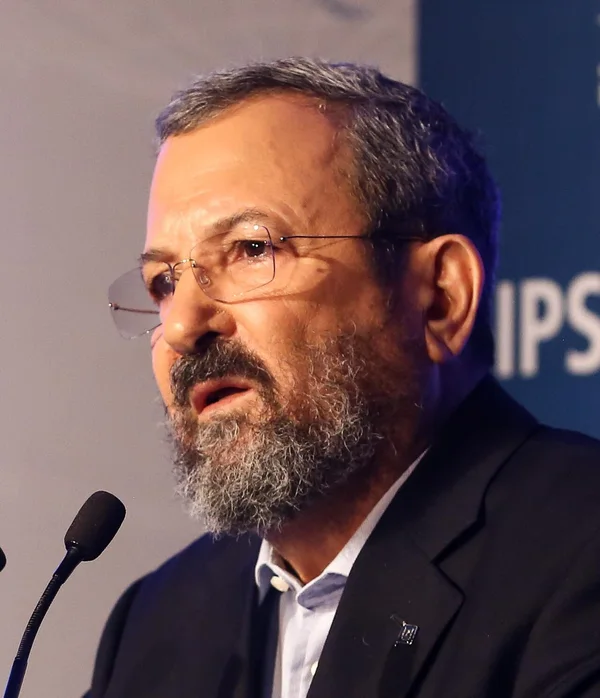
Palestinians
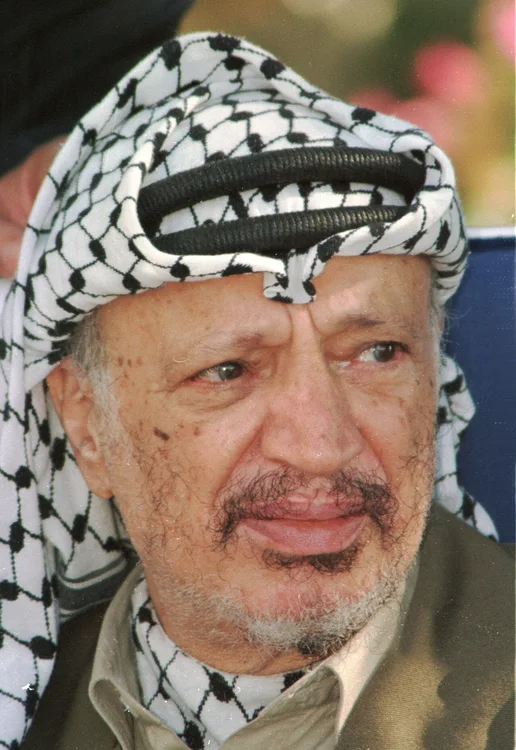
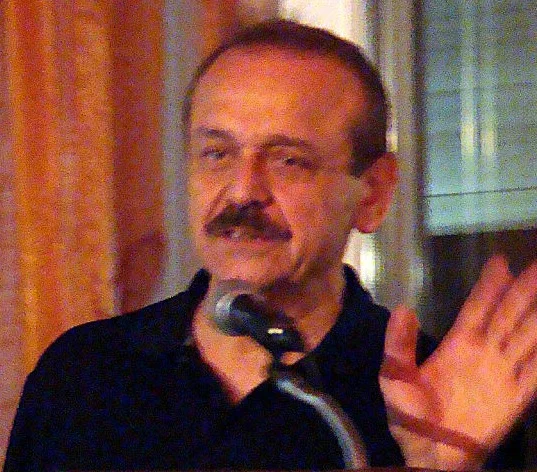
Mediators and international partners
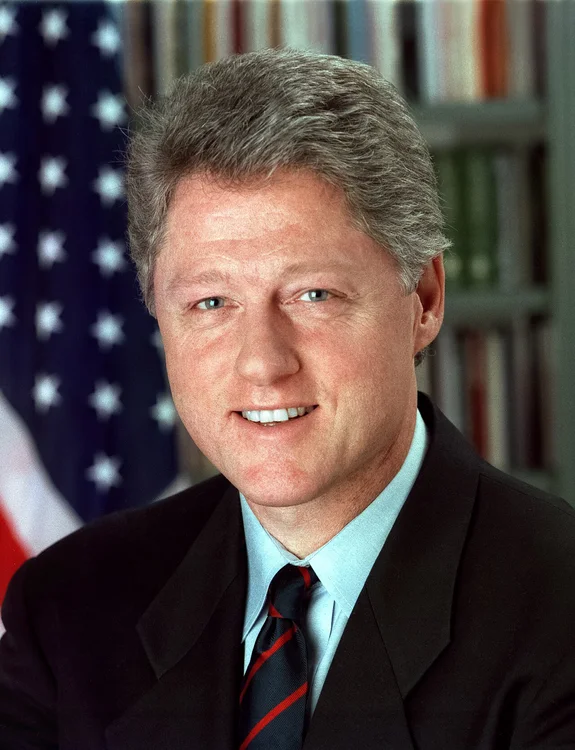
What was proposed
- Territory: a Palestinian state on 94%–96% of the West Bank, plus land swaps of 1%–3%. Settlement blocs holding about 80% of the settlers go to Israel.13
- Jerusalem: what is Arab goes to Palestine and what is Jewish to Israel, in the Old City too. Two formulas were offered for the Temple Mount / Haram al-Sharif; both give Palestine sovereignty over the compound and Israel sovereignty over the Western Wall.3
- Refugees: the solution centres on the Palestinian state.1 Five possible destinations: the Palestinian state, land swapped to it, the host countries, third countries, and Israel; the last three depend on each country's policy.3
- Security: an international force, an Israeli presence in the Jordan Valley for 36 months, three early-warning stations, and a Palestinian state without an army but with its own security forces.31
- End of conflict: the agreement ends the conflict and its implementation ends all claims, anchored in a Security Council resolution.31
The geography
How to use the map
Choose a country on the map or in the list. One finger scrolls the page; two fingers move and pinch the map. You can also use + and −. For one-finger map dragging, enable the button above. Keyboard: arrows to pan, + and − to zoom, Home to reset.
Layers
Classification follows the original research as of 7 Oct 2026. This schematic map is not a legal boundary map or a live update.
- International boundary agreed in a peace treaty
- Treaty line with Jordan, “without prejudice to the status” of the territory beyond it
- 1949 armistice line (“Green Line”) — not an agreed final border
- “Blue Line” — UN line of withdrawal (2000), not a border
- Ceasefire / disengagement line with Syria (1974)
- Other international boundary
- West Bank and Gaza Strip: permanent status not agreed
- Golan Heights: held by Israel since 1967; annexation not recognised by the UN
- UN area of separation (UNDOF); Israeli army positions inside it since December 2024
Schematic map. Lines are approximate and are not a legal determination. Data: Natural Earth (public domain), 1:10m scale; line classification and place names by this site. Lines as of October 2026. Peace map
The hard decisions
- Nothing in writing: Clinton read the ideas out. The text we know comes from versions published by Haaretz and the Jerusalem Media and Communication Center (JMCC).3
- The Palestinian reservations (1 January 2001): the blocs would break territorial contiguity and could split the state into three cantons; Jerusalem would become disconnected islands; no people has ever given up its right of return; and one year was enough for the withdrawal. The team asked for clarifications and maps.10
- The Israeli reservations: on 28 December the security cabinet accepted the ideas as a basis for discussion, with conditions.8 Barak called off a trip to a summit in Egypt, saying it made no sense until the Palestinians accepted the framework.9 The White House said Barak too had reservations, without listing them.2
- The clock: Clinton made clear these were his own ideas, and that if they were not accepted they would come off the table and leave with him.3
Where accounts differ
- According to Ehud Barak and the Israeli account (interview with Benny Morris, 2002)
- Israel said yes and Arafat did not. According to Morris, Israel accepted a plan meaning withdrawal from about 95% of the West Bank with land compensation, and Palestinian sovereignty over the Arab neighbourhoods of East Jerusalem; Arafat's qualified yes, about two weeks later, was in effect a refusal. Morris notes that Palestinian officials dispute this and say Arafat accepted the proposals. Barak said Israel could not take in even one refugee on the basis of a right of return.11
- According to The Palestinian negotiating team
- The proposal guarantees neither a viable state nor the refugees' return to their homes.10 According to Malley and Agha, the Palestinians saw the parameters as recycled Israeli positions.12
- According to Dennis Ross, the US envoy
- The parameters went far beyond Camp David, and Arafat proved unable to accept them; in doing so he convinced the Israeli public that he could not accept any solution.13
- According to Hussein Agha and Robert Malley
- Ross's account hides the progress that was made: the two sides' vital interests can be reconciled, and a deal was within reach. Each side's response should be read in context, and in the light of everyone's mistakes.13
What was carried out 0
—
What remains open
- There were percentages but no map, and the Palestinian side argued that the proposal could not be judged without maps.10
- Two questions were left without agreed wording: the right of return, for which Clinton himself offered two alternative formulas, and the Temple Mount / Haram al-Sharif.3
- What they left behind: the Chatham House researchers call the parameters a landmark.14 They became a reference point, and according to ECF the Geneva Initiative of 2003 draws on them.1
Sources
Open the sources, compare and check for yourself.
What can this source tell us?
A document shows what was written; testimony tells what someone saw or remembers; research and reporting add interpretation and comparison. Always ask who produced the information and what still needs checking. The label alone does not establish quality, and two sites copying one document still give you one source.
Practise checking sourcesShow all sources (15)Hide the sources
Cited on this page
- Clinton Parameters (2000)Research Economic Cooperation Foundation (ECF)
- Press Briefing by Jake Siewert, 3 January 2001Primary The White House, Office of the Press Secretary (Clinton Presidential archive)3 January 2001
- Clinton Parameters (text as published by Haaretz and the Jerusalem Media and Communication Center; no official written text was distributed)Reference Foundation for Middle East Peace (FMEP)23 December 2000
- The Middle East, including the Palestinian Question — October 2026 Monthly ForecastResearch Security Council Report1 October 2026
- Trilateral Statement on the Middle East Peace Summit at Camp DavidPrimary The White House (Clinton Presidential archive)25 July 2000
- The Oslo Accords and the Arab-Israeli Peace ProcessOfficial archive U.S. Department of State, Office of the Historian
- Remarks by the President at Israel Policy Forum Gala Dinner, New York, 7 January 2001Primary The White House, Office of the Press Secretary (Clinton Presidential archive)7 January 2001
- RTÉ News report on the Middle East, 28 December 2000 (Israel's security cabinet conditionally accepts the US ideas)Press RTÉ News28 December 2000
- Online NewsHour update, 28 December 2000 (plans for an Israeli-Palestinian summit in Egypt collapse)Press PBS NewsHour28 December 2000
- Official Palestinian Response to the Clinton Parameters (and letter to the international community), 1 January 2001Primary Palestinian Negotiating Team (Yasser Abed Rabbo), as reproduced by the Institute for National Security Studies (INSS)1 January 2001
- Benny Morris, Camp David and After: An Exchange (1. An Interview with Ehud Barak)Press The New York Review of Books13 June 2002
- Robert Malley and Hussein Agha, Camp David: The Tragedy of ErrorsPress The New York Review of Books9 August 2001
- Dennis Ross and Gidi Grinstein, reply by Hussein Agha and Robert Malley, Camp David: An ExchangePress The New York Review of Books20 September 2001
- Greg Shapland and Yossi Mekelberg, Israeli–Palestinian Peacemaking: The Camp David approach, 2000Research Chatham House24 July 2018
Further reading
- Peace proposal – President Clinton's “parameters” (speech to the Israel Policy Forum, 7 January 2001)Primary United Nations, Division for Palestinian Rights (UNISPAL)7 January 2001